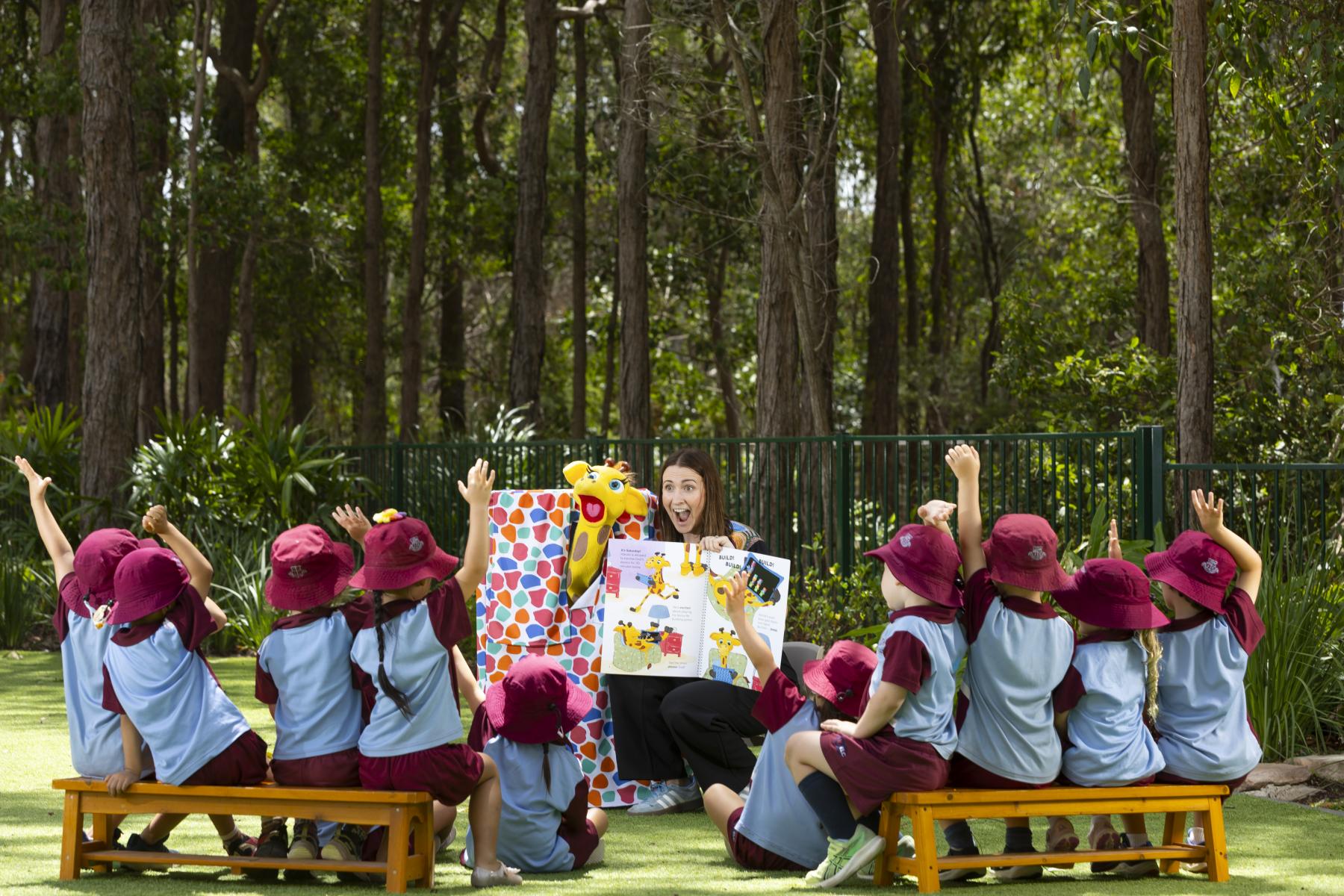
These little learners at Ormiston College Early Learning Centre, Puggle’s Burrow, are among the first in Queensland to trial Life Ed’s new early years module –Harold’s Safe Screen Time – designed to equip children under five with age-appropriate skills to navigate their online world.
Rolling out nationally this term, the program will be delivered in preschools and early learning centres across Australia. With a focus on fun, play-based learning and a specially crafted storybook featuring beloved mascot Healthy Harold, children learn key online safety skills including:
Life Ed Queensland CEO Taryn Black, says the program comes at a crucial time, as AI platforms, online bullying and unwanted contact present new risks for young people.
“Many preschoolers are accessing the online world long before they own a device. Digital technology is already part of their everyday learning and play, so we can’t afford to wait until primary school to start teaching these skills,” Ms Black said.
“It’s critical to build safe habits and clear boundaries from the earliest years.”
After an engaging session with educator Sara, the Ormiston College ELC children gave the program an enthusiastic thumbs up.
“I learned from Harold that you shouldn’t use your screen too much,” said Ruby, aged four. “When my screen time runs out, I like to play with my Barbies.”
Cliffy, also four, said he learned to always check before clicking on something unusual.
“If you don’t know what something is on your iPad you should tell your mum or dad,” he said.
The program was developed in consultation with Early Childhood Australia and the Australian Children’s Education and Care Quality Authority (ACECQA). It also responds to concerning findings from the eSafety Commissioner :
Harold’s Safe Screen Time joins Life Ed’s suite of Early Years Learning Program modules, alongside Harold’s Body Boundaries, Harold’s Big Feelings, Super Safe Harold and Harold’s Healthy Day.
Together, these programs form the foundation of a whole-school approach to cybersafety and respectful relationships, equipping children to navigate the digital world confidently from preschool through to Year 6.
Feedback from parents reaffirms the need for early intervention. Life Ed Queensland’s 2025 survey of 2600 parents found that more than 90% observed at least one positive change in their child after participating in Life Ed programs.
Many parents noticed safer device behaviours at home, with almost 35% reporting improvements in how their child engaged with technology. One in three said their child could now recognise and report unsafe online contact – an important milestone in early digital literacy.
“Parents are struggling to keep up with the pace of change, so programs like this are providing real relief,” Ms Black said.
Harold’s Safe Screen Time is evidence informed and strengths based, aligning with national and international frameworks including: